Learning, made for each age.
Age-appropriate programs for every stage of early development — from infants up to PP2, with flexible daycare alongside.
1:10 ratio
Small groups for personal attention.
Caring educators
Teachers trained in child-led, play-based learning.
Flexible timings
Full-day, half-day and 3-hour daycare batches.
Whole-child growth
Cognitive, emotional, social and physical development.

Infants
A nurturing, safe and stimulating environment designed to feel like home. Gentle care, sensory exploration and early bonds built through responsive interaction.
Enquire about Infants
Toddlers
Active exploration and discovery through play. Children grow in language, independence and friendship, with structured activities balanced by free play.
Enquire about Toddlers
Pre-Nursery
The groundwork for creativity and independence. Hands-on activities build cognitive growth, fine motor skills and early literacy and numeracy.
Enquire about Pre-Nursery
PP1 & PP2
A balanced blend of academic readiness and essential life skills. Inquiry-led learning builds critical thinking, problem-solving and a lasting love of learning.
Enquire about PP1 & PP2
Daycare
A safe, engaging and enriching second home. Choose 3-hour batches, or half-day and full-day options, with creative activities, rest, play and thoughtfully planned nutrition from our in-house dietitian.
Enquire about DaycareEight domains, one whole child.
At WISH, children’s learning is supported through eight connected developmental domains. These domains help us plan meaningful experiences, observe each child’s interests and growth, and offer support that suits their stage of development.
They are not taught as eight separate subjects: children often develop across several domains through one experience.
01Well-being
Well-being supports children’s physical health, emotional security and growing sense of confidence. Children learn best when they feel safe, cared for and comfortable enough to explore.
This domain includes movement and body awareness; sensory experiences; healthy routines; rest and regulation; and growing independence in everyday self-care, such as washing hands, eating, tidying and asking for help.
At WISH, children are supported through active play, calm transitions, predictable routines, self-care opportunities and warm, responsive relationships with educators. Adults notice children’s cues and help them feel secure as they encounter new experiences.
Children may: move with increasing confidence, try familiar self-care tasks, seek comfort when needed, express basic needs and begin to settle into routines.

02Thinking
Thinking develops children’s ability to notice, remember, compare, make connections and reason about the world. It includes early mathematical and scientific thinking, as well as attention, memory, sequencing, classification and understanding cause and effect.
At WISH, children encounter hands-on materials and purposeful questions that invite them to think. They might match objects, sort materials by colour or size, notice patterns, compare quantities, recall what happened in a story or predict what an object might do.
Educators give children time to investigate and explain their ideas in their own way. The focus is on helping children make sense of what they experience, rather than expecting them to memorise answers.
Children may: notice similarities and differences, remember familiar events, sort or match objects, recognise a simple pattern, make a prediction or explain what they noticed.

03Creativity
Creativity gives children ways to imagine, make choices and express ideas. Children can communicate what they are thinking through many forms—not only words—including art, music, movement, construction, pretend play and storytelling.
At WISH, open-ended materials invite children to explore and make something of their own. They might paint with different tools, build a structure, create a sound pattern, move to music, use loose parts in pretend play or represent an idea through drawing.
Educators value children’s choices and the process of creating. Children are encouraged to experiment with materials and express their ideas, rather than being expected to produce identical finished work.
Children may: try different materials, combine colours or shapes, invent a story or role, use movement to express an idea, or revisit and change something they have made.
04Exploration
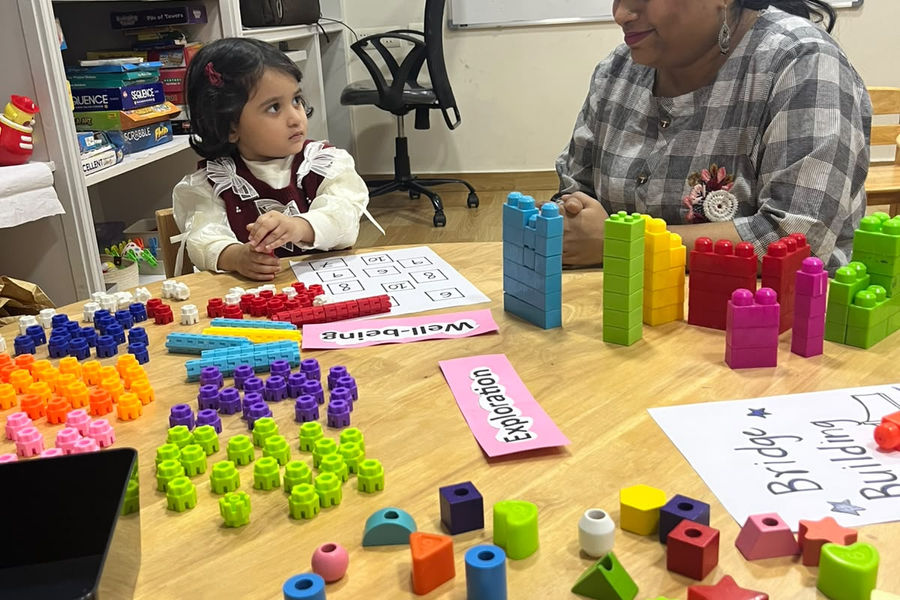
Exploration is children’s active engagement with people, materials and the environment. It begins with curiosity: noticing something, wondering about it and finding ways to investigate.
At WISH, children explore through sensory play, nature experiences, materials, movement and inquiry. They may touch, listen, observe, compare, collect, experiment and return to an experience to find out more. Educators encourage questions such as “What do you notice?” and “What do you think might happen?”
Exploration gives children direct experiences to build on. It helps them develop curiosity, observation and confidence in approaching something unfamiliar.
Children may: investigate a new material, notice a change, explore how something feels or sounds, watch a plant or insect, or return to an activity with a new idea.
05Communication
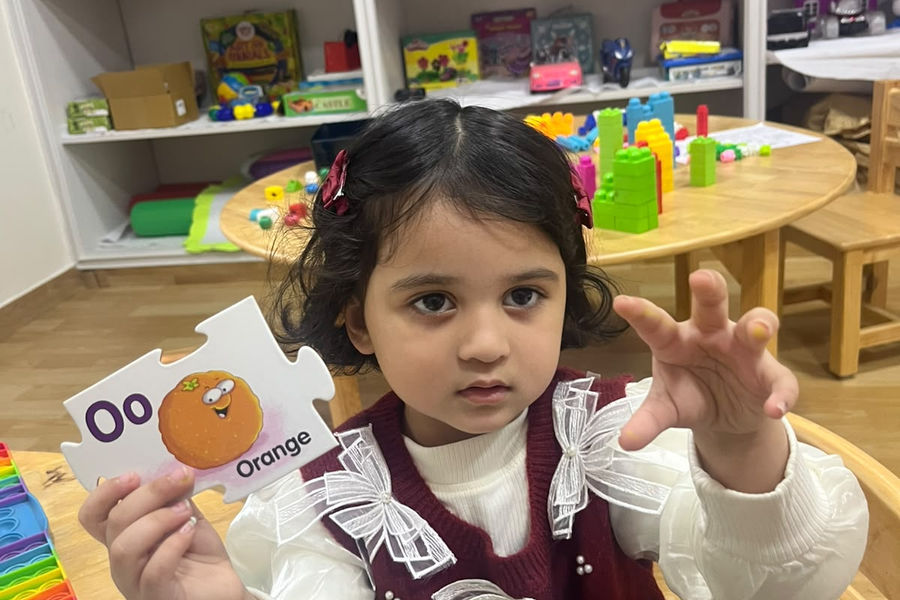
Communication includes the ways children understand and share meaning. It develops through listening, speaking, gesture, facial expression, movement, play and early forms of reading and writing.
At WISH, communication is supported through conversation, songs, stories, rhymes, puppets, dramatic play and shared experiences. Educators introduce useful words, listen carefully to children and give them time to respond. Children are encouraged to communicate in the languages and forms that are meaningful to them.
As children grow, experiences can also support vocabulary, storytelling, phonological awareness, early mark-making and writing readiness.
Children may: respond to a familiar direction or story, use gestures or words to express a need, learn new vocabulary, take part in a conversation, retell part of a story or make marks to represent an idea.
06Relationships
Relationships help children develop a sense of belonging and learn how to connect with others. This domain includes secure relationships with adults, interactions with peers, empathy, cooperation, turn-taking and respect for others’ feelings and boundaries.
At WISH, caring adults help children feel welcomed and included. Through shared play, group routines, stories and everyday interactions, children get chances to notice others, participate together and gradually manage small social challenges.
Educators model kind communication and help children find words or actions for what they need. Learning to build relationships takes time and support; children are guided at their own pace.
Children may: seek connection with a trusted adult, play alongside or with another child, practise taking turns, notice someone else’s feelings, share an interest or begin to repair a disagreement with adult support.
07Problem-solving
Problem-solving develops when children meet a challenge, consider what they could try, and learn from what happens. It includes persistence, flexible thinking, trial and error, planning and adjusting an approach.
At WISH, children encounter manageable challenges in puzzles, construction, practical-life activities, experiments and collaborative play. For example, they might try different ways to make a bridge reach, work out how to fit shapes into a space or change their approach when a tower falls.
Educators encourage children to think through the challenge instead of immediately solving it for them. They offer help when needed and treat attempts, revisions and discoveries as part of learning.
Children may: try more than one strategy, persist with a task, ask for help, notice why something did or did not work, or use a previous discovery in a new situation.
08Global Awareness
Global awareness helps children understand that they belong to families, communities and a wider world. It includes respect for different people, cultures, languages and ways of life, as well as care for animals, plants and the environment.
At WISH, children begin with the familiar—home, school, neighbourhood, food, festivals, local places and the people around them—and gradually make connections beyond their immediate experience. Stories, music, maps, nature study, community experiences and conversations can help children encounter different perspectives.
Global awareness is built through respectful, age-appropriate experiences that value both what people share and the ways they may be different. It also encourages children to care for their surroundings and recognise that their actions can affect others and the environment.
Children may: talk about family or community experiences, encounter different languages or traditions through stories, show curiosity about people and places, care for a plant or animal, or take part in looking after shared materials and spaces.
How the domains work together
A simple experience such as planting a seed can support all eight domains.
In this way, WISH makes learning holistic and meaningful. Educators observe children’s participation, questions, conversations, choices and creations to understand their learning and plan what to offer next.
Book a visit- 1Well-beingChildren use their hands and follow a care routine.
- 2ThinkingThey compare seeds or notice growth.
- 3CreativityThey draw or build a garden.
- 4ExplorationThey investigate soil, water and sunlight.
- 5CommunicationThey learn words and describe changes.
- 6RelationshipsThey care for the plant together.
- 7Problem-solvingThey work out what to do if a plant is dry or leaning.
- 8Global awarenessThey connect plants with food, nature and the local environment.
A gentle rhythm, every day.
A balanced routine of learning, play, rest and nutrition.
Arrival & free play
A gentle transition into the day through self-directed activities.
Circle time & learning
Stories, songs and group experiences that spark curiosity.
Healthy snack
Time to be together and refuel.
Outdoor play
Movement, nature and gross motor development.
Lunch & rest
Balanced meals and quiet time for younger children.
Creative activities
Art, music and hands-on exploration.
Small by design, personal by choice.
We keep groups small, so each child gets the attention they deserve. Our admissions process helps us understand your child’s needs and interests.
- Limited seats per batch
- Admissions now open for 2027–28
- Campus tours available by appointment
- Fee details are shared personally with every enquiring family
Find the program that fits your child.
Schedule a visit and see our approach in action.